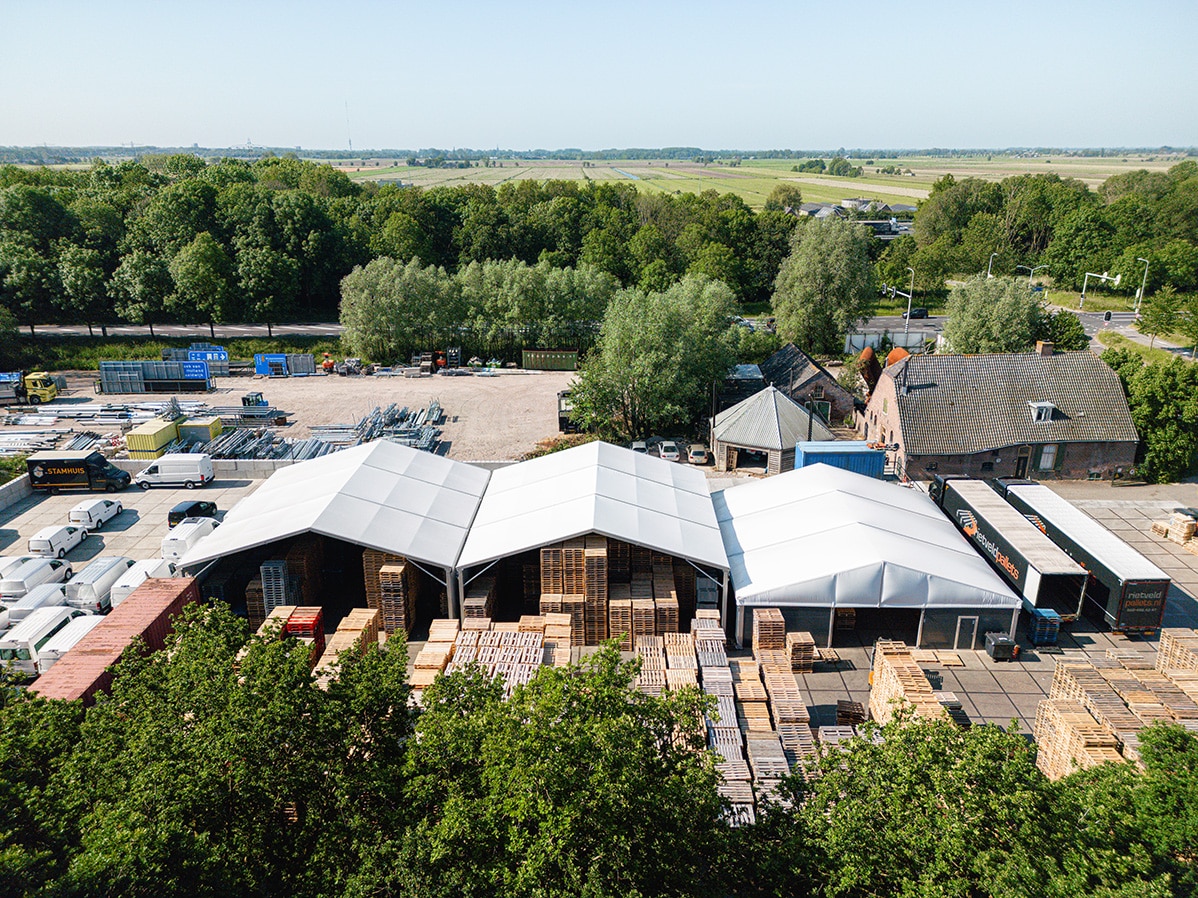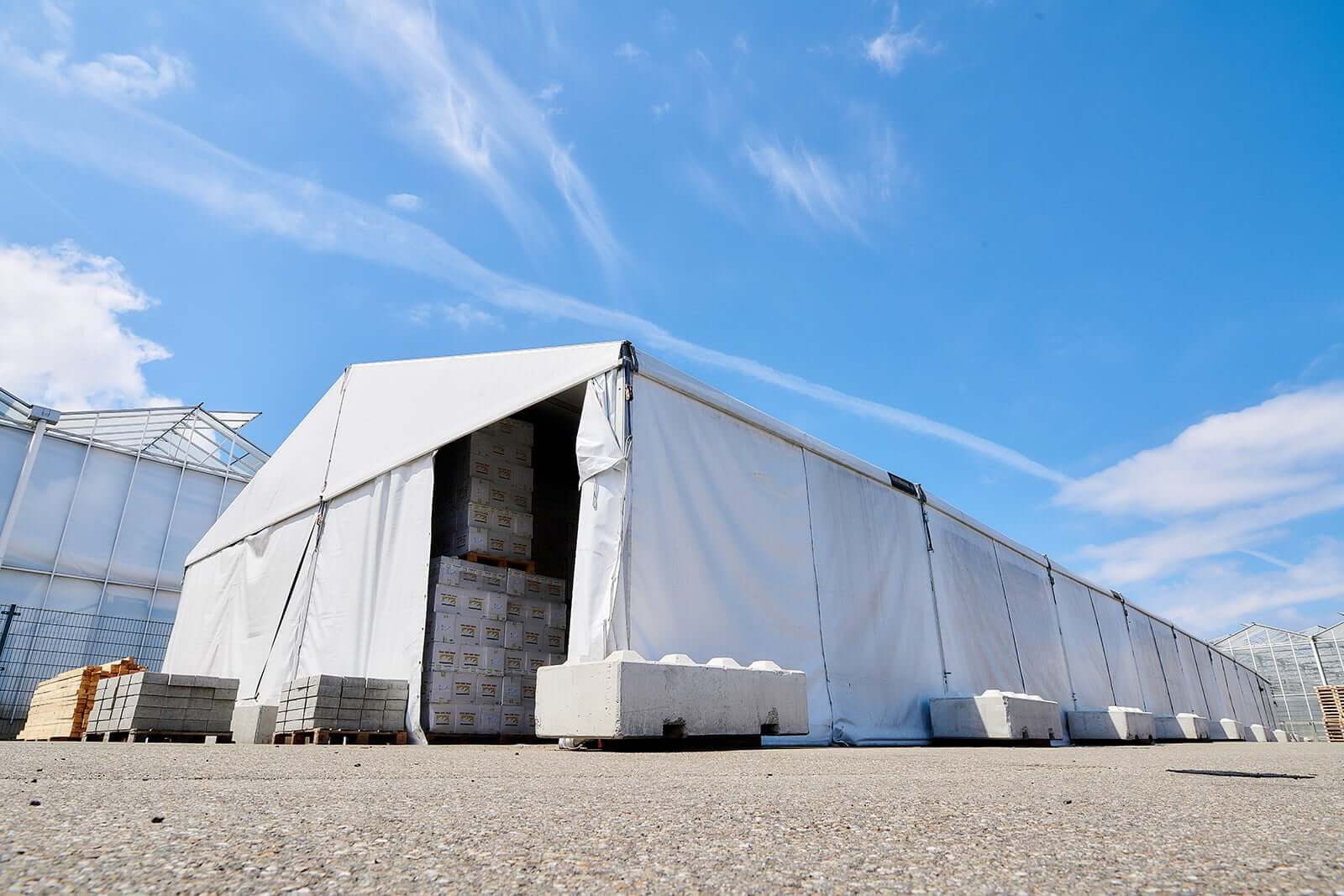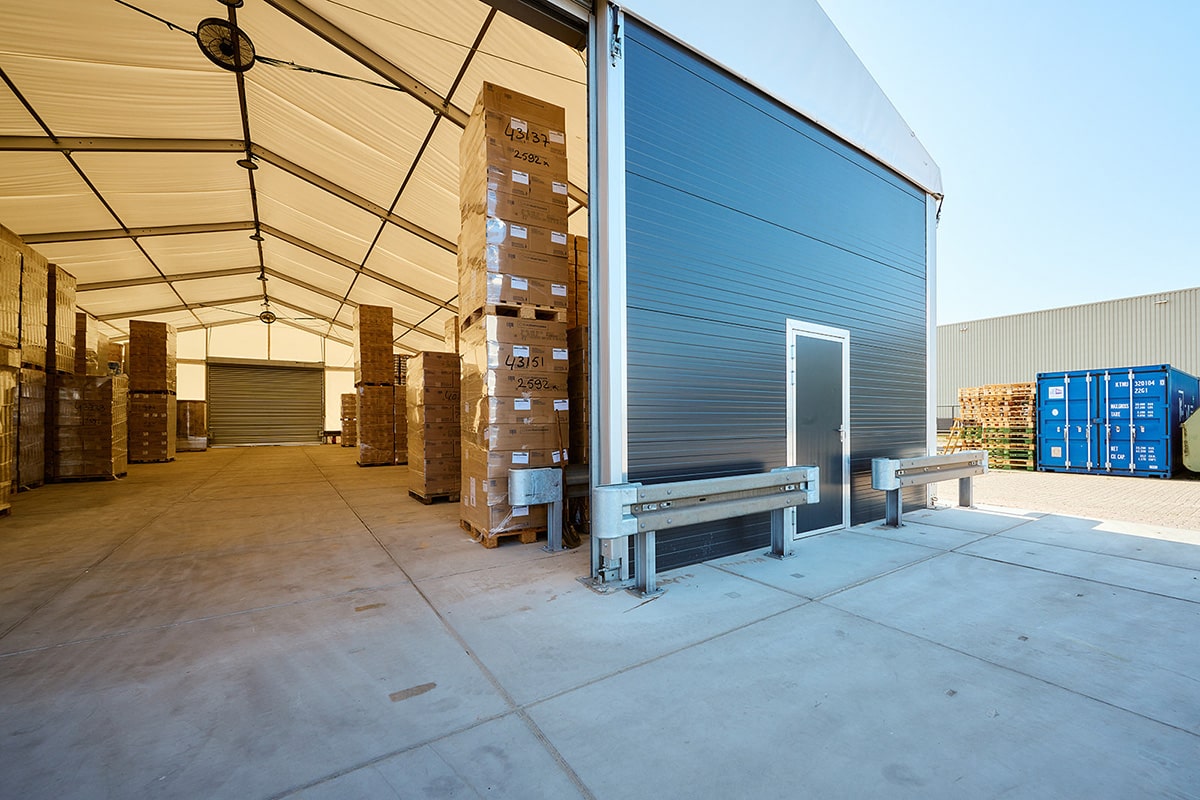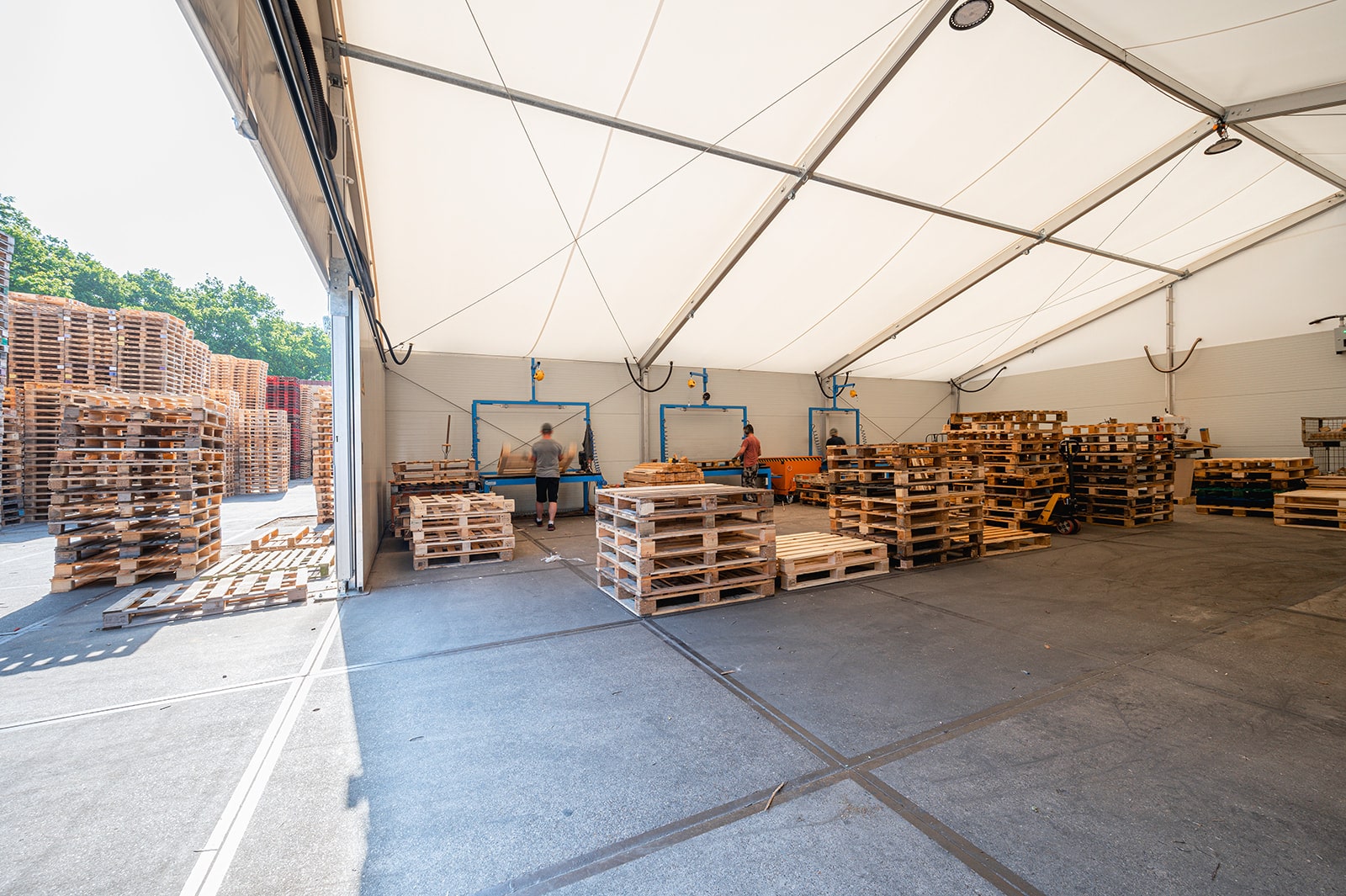
Companies that need extra space are often faced with the same choice: rent a tent hall or invest in their own tent hall. Both options offer speed and flexibility, but differ significantly in approach, costs, and duration of use. The right choice depends on the situation, not on a standard answer. In our comparison table, you can clearly see the differences.
This article clearly outlines the differences and helps in making an informed choice.
Why this question arises so often
The need for extra business space usually does not arise without reason. Think of growth, temporary projects, seasonal peaks, or a renovation of existing buildings. In such situations, speed is important, but so is certainty.
A tent hall is then a logical solution. The follow-up question is simply: will this space remain temporary, or will it become part of the business operations for a longer period? That largely determines whether renting or buying is a better fit.
What renting a tent hall means
Renting a tent hall is about flexibility and speed. No large upfront investment is required and the hall is available quickly. The costs are predictable because you work with a fixed monthly amount. Read more about how to rent a tent hall in this article.
Rent is often chosen when:
- the need for space is temporary
- the exact duration of use is still uncertain
- flexibility is more important than ownership
For projects, peak periods, or temporary production or storage space, renting offers a practical and accessible solution. The disadvantage is that with long-term use, the total costs increase without resulting in ownership.
What buying a tent hall entails
When you buy a tent hall, you are investing in a structural solution. The hall is tailored to the situation and can be used for years. The initial investment is higher than with renting, but in the long term, the annual costs are often lower. Read more about how to buy your tent hall in this article.
Buying is a good fit when:
- the space is needed structurally
- continuity is important for business operations
- customization and adaptability are desired
A purchased tent hall offers full control over use, layout, and expansion possibilities. On the other hand, flexibility is lower if the need for space changes significantly in the future.
Flexibility versus ownership
In practice, the trade-off often comes down to flexibility versus ownership. Renting gives the freedom to switch quickly and easily scale up or down. Buying offers certainty, stability, and long-term control.
There is no ‘right’ choice that applies to every company. The best solution aligns with the phase the company is in and the expectations for the coming years.
When renting makes sense
Renting is often the best choice for:
- temporary expansion
- projects with a fixed end date
- seasonal activities
- situations where speed is decisive
When buying is a better fit
Buying is usually more logical for:
- long-term or permanent space requirements
- growth that is structural
- need for custom solutions or integration with existing buildings
The right choice starts with insight
The choice between renting and buying requires insight into the duration of use, flexibility, and investment. By comparing these factors, clarity in decision-making arises and the tent hall becomes a functional solution instead of an uncertain compromise. You can compare the different tent halls on our website to find the right solution.
Would you like to see a comparison table? This can be viewed on our page about renting or buying.